
Introduction
Reliable refrigeration and thoughtful storage are the backbone of a well-organized kitchen. A beautiful dining room cannot compensate for ingredients that are poorly stored, a refrigerator with insufficient capacity or a work area where staff cannot find what they need. Whether you are planning a restaurant, opening a café, running catering events or upgrading your home kitchen, choosing the right equipment starts with your workflow.
This practical guide from Habesha Studio explains the differences between refrigerators, freezers, display coolers, ice machines, shelving and food storage containers. It also covers larger commercial installations and what to do when an online retailer displays “See options” instead of a fixed price. Use the advice to build a sensible shortlist, then check the current specifications and terms directly with each manufacturer or seller.
1. Start with your storage plan, not a product listing
Before shopping, map the route food takes through your kitchen: delivery, inspection, dry storage, refrigerated storage, preparation, cooking and service. Note the products you handle, how frequently deliveries arrive and how much capacity you need during your busiest period. A café that mostly serves drinks and pastries will have different needs from a full-service restaurant preparing meat, dairy, vegetables and desserts.
Aviasales
Explore a useful travel service from one of our selected partners.
Measure the available floor area, door openings, ceiling height and working clearances. Record the location of electrical outlets, drains and ventilation. Remember that the external measurements of an appliance do not tell you how much usable storage it provides. Shelving arrangement, door swing, drawer configuration and access during service can matter just as much as nominal capacity.
- List products by storage needs and daily turnover.
- Estimate peak inventory, not just typical daily inventory.
- Separate ingredients, prepared food, packaging and cleaning supplies appropriately.
- Check the path for delivery and installation before ordering a large appliance.
2. Commercial refrigerators: reach-in, undercounter and prep models
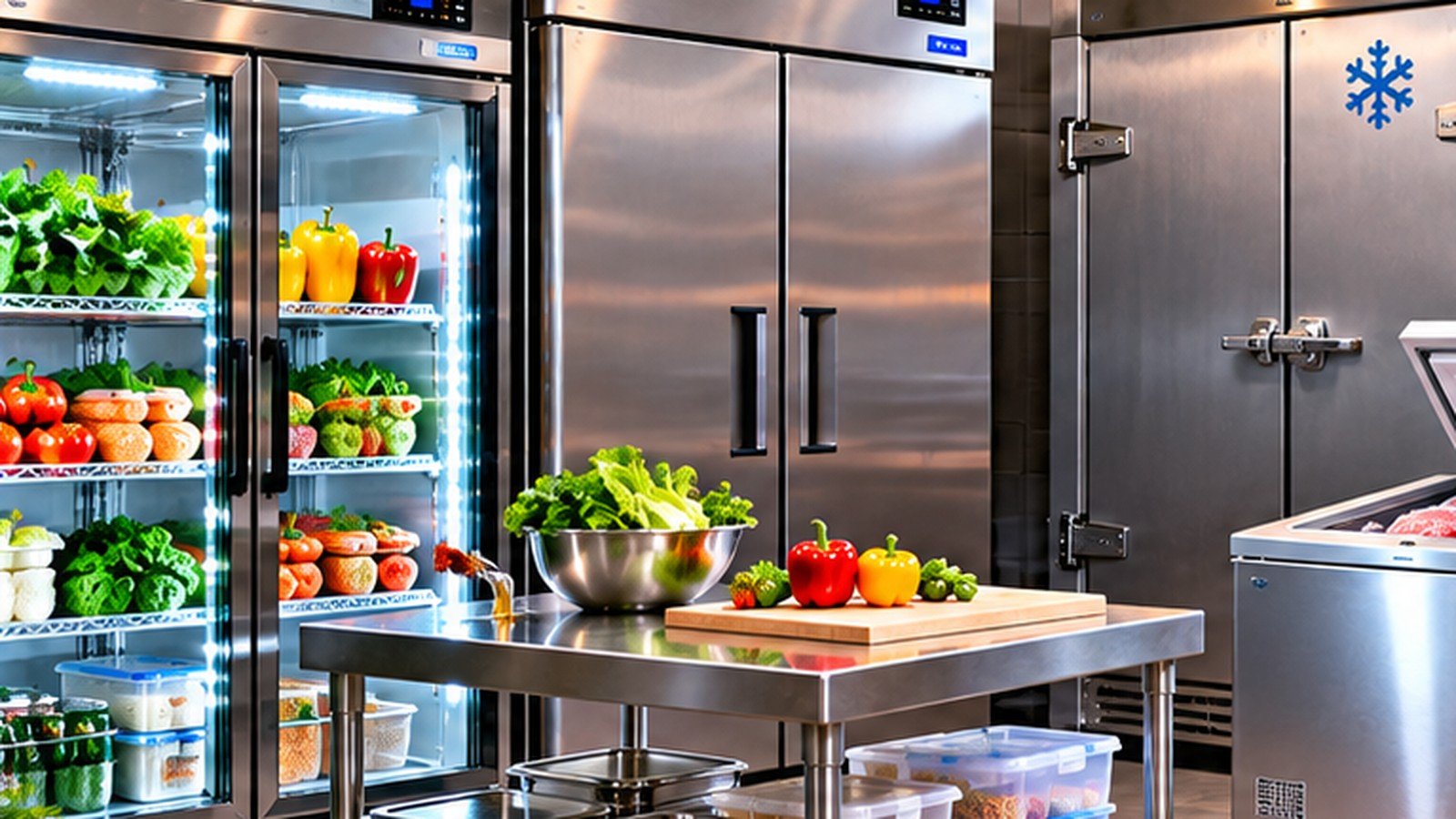
Commercial refrigerators are designed for specific workflows. Reach-in refrigerators offer upright storage and are common in busy food-service operations. Undercounter refrigerators place frequently used ingredients close to a preparation station, saving walking time and floor space. Refrigerated prep tables combine chilled ingredient storage with a usable work surface, making them attractive for sandwich, salad and pizza preparation.
Compare net usable capacity, temperature control, door seals, shelf configuration, cleaning access, energy consumption and service availability. For commercial use, confirm that a model is suitable for the workload and complies with applicable local requirements. If buying for a home, consider noise, ventilation, electrical compatibility and whether professional installation is required.
3. Freezers: upright, chest and specialist options
Freezers help protect ingredients and make inventory planning more flexible, but not all designs are interchangeable. Upright freezers make it easier to separate stock on shelves and retrieve items quickly. Chest freezers can offer useful bulk capacity, although items near the bottom may be harder to reach. Countertop or undercounter freezers serve smaller spaces and specific service points.
Choose based on volume, access, defrost and maintenance needs, energy efficiency, noise and the amount of space available for opening doors or lids. Evaluate the consequences of a power outage and whether your operating procedures require temperature monitoring or alarm features. Check the actual operating temperature range with the seller rather than assuming that every freezer is built for the same purpose.
4. Display coolers and beverage refrigerators
Glass-door display coolers can make beverages, desserts or packaged items easy to see, while back-of-house refrigerators prioritize storage and preparation. For guest-facing equipment, compare visibility, shelf flexibility, lighting, door type, noise and appearance. For cold drinks, you may value fast restocking and compact footprints; for delicate food, stable temperature control and appropriate food storage performance matter more.
Do not assume a drinks-display refrigerator is automatically suitable for every type of perishable food. Read the intended-use guidance and verify the required storage conditions. Think about placement as well: a display cooler directly beside a narrow service corridor may look attractive in photos but slow down your team.
5. Ice makers and ice storage
Ice equipment should be planned around demand rather than selected by size alone. A small café making iced drinks has a different pattern of consumption from a bar or banquet venue with heavy peak periods. Review ice production capacity, bin storage, cube style, space, water supply, drainage, filtration and cleaning requirements.
Ask whether installation needs a professional connection to water and drainage. Ice machines must be cleaned and maintained according to manufacturer instructions. When ice is used in food and drinks, the handling equipment and storage environment also deserve attention; provide clean scoops and a practical place to store them.
6. Shelving and dry storage: efficient space without clutter
Commercial shelving may be less exciting than a new refrigerator, but it can improve almost every stage of your workflow. Use sturdy racks to organize dry ingredients, equipment, tableware and approved storage bins. Compare load ratings, shelf dimensions, stability, corrosion resistance, cleanability and assembly requirements.
Plan shelving around the heaviest items and actual staff reach. Avoid blocking ventilation, walkways, emergency routes or the access required for appliance servicing. Clearly labeled locations and simple stock rotation routines can reduce time spent searching for ingredients and help prevent avoidable waste.
7. Food storage containers and organization systems
Choosing suitable food containers helps maintain order from delivery through preparation and service. Useful options include clear stackable containers, lidded ingredient bins, food pans, portion containers and labeled dry-storage boxes. The right shape can matter: containers that fit your shelves and refrigerator compartments are often more valuable than containers with the greatest advertised volume.
Choose materials suited to the food, temperature and cleaning method. Check whether containers are intended for food contact and whether lids fit securely. Build a simple labeling system for product name, preparation or opening date where appropriate, and any other information your operation requires. Keep cleaning chemicals separate from food storage.
8. Large commercial storage: walk-in cold rooms and heavy-duty systems
Large restaurants, hotels and catering operations may need equipment that goes beyond a standard reach-in refrigerator: walk-in coolers, walk-in freezers, multi-door cabinets, large-capacity chest freezers and modular shelving systems. These are often infrastructure decisions rather than ordinary countertop purchases. In addition to the appliance price, consider site surveys, delivery access, insulation, electrical supply, refrigeration servicing, installation and ongoing operating costs.
Some large equipment listings have multiple configurations or seller-dependent offers and therefore display “See options” instead of a visible price. This does not establish that the equipment is unavailable, and it does not mean you should invent a price for your website. Open the product listing to review configurations and current offers. If a marketplace listing gives too little information, ask the seller or an authorized installer for an itemized quotation.
For a purchasing decision, record the model, dimensions, capacity, power requirements, temperature range, warranty, seller, delivery terms and a written quote. For walk-in rooms especially, confirm suitability with a qualified local professional before purchase.
9. Compare total cost—not only the advertised price
The purchase price is only one part of the budget. Larger refrigeration appliances may involve shipping charges, installation, dedicated electrical connections, service plans, replacement components, energy usage and eventual disposal. Think in terms of total cost of ownership rather than choosing the cheapest-looking listing.
Build a comparison sheet with the same criteria for each candidate: usable capacity, external size, operating requirements, expected workload, warranty and service coverage, cleaning access, estimated energy use, delivery costs and installation needs. A less expensive unit with poor fit can create daily inconvenience, whereas a correctly sized model may support faster service and better organization.
10. Restaurant needs versus home-kitchen needs
Restaurants and cafés usually emphasize repetitive daily use, quick access during service, replaceable components, inventory organization and local food-safety obligations. Home kitchens may prioritize compact dimensions, low noise, household electrical compatibility and straightforward maintenance. Catering operations need to consider safe transport as well as storage at their base kitchen.
Commercial equipment should not be assumed suitable for home installation merely because it is available online. Conversely, household appliances should not be presumed adequate for an intensive commercial workload. Compare intended use with the manufacturer’s documentation and your own local requirements.
11. A practical buyer’s checklist
- Capacity: Does the equipment fit your peak stock and service volume?
- Dimensions: Have you measured floor space, doorway width and door opening?
- Utilities: Are the electrical, water, drainage and ventilation requirements compatible?
- Temperature control: Is the model intended for the ingredients or drinks you will store?
- Cleaning: Can shelves, seals, bins and other components be cleaned easily?
- Reliability: Are warranty terms, spare parts and servicing available in your location?
- Workflow: Does it shorten travel and improve access rather than creating bottlenecks?
- Costs: Have you included delivery, installation, electricity and maintenance?
- Seller details: Have you checked the exact model, specifications and return policy?
12. Frequently asked questions
What is the difference between a commercial refrigerator and a display cooler?
A commercial refrigerator is typically selected for food-storage workflow and durability, while a display cooler emphasizes visibility and access for drinks or packaged items. Check each model’s intended use and temperature performance.
Should I buy an upright or chest freezer?
An upright freezer generally supports organized shelf access; a chest freezer may suit bulk storage. Compare capacity, footprint, handling and energy performance for your specific needs.
Why does Amazon sometimes say “See options” instead of showing a price?
A listing may have multiple configurations, sellers or buying offers. Open the product detail page to review current choices. Do not assume the price is zero or copy an unverified amount into your own shop.
Can I use commercial refrigeration equipment at home?
Sometimes, but suitability depends on the appliance, local installation requirements, noise, electrical connections and manufacturer guidance. Some units are intended only for commercial environments.
What should I prioritize when buying shelving and food containers?
Start with food suitability, ease of cleaning, dimensions, load capacity, durability and how well the pieces fit your storage layout.
Does Habesha Studio sell these products directly?
Habesha Studio provides shopping guidance and links to third-party sellers. Product availability, specifications, shipping, returns and payment are handled by the retailer you choose.
Explore Refrigeration & Storage at Habesha Studio
Ready to compare solutions? Visit the Refrigeration & Storage shopping page to explore six useful product collections: commercial refrigerators, freezers and cold storage, display coolers, ice machines, shelving and food containers. You can also browse the wider Habesha Shopping Center or explore Commercial Kitchen Equipment for ovens, preparation equipment and commercial workstations.
Affiliate disclosure: As an Amazon Associate I earn from qualifying purchases. Some links may be affiliate links. Product details, prices and availability can change. Check current information on the seller’s website before making a purchase.