
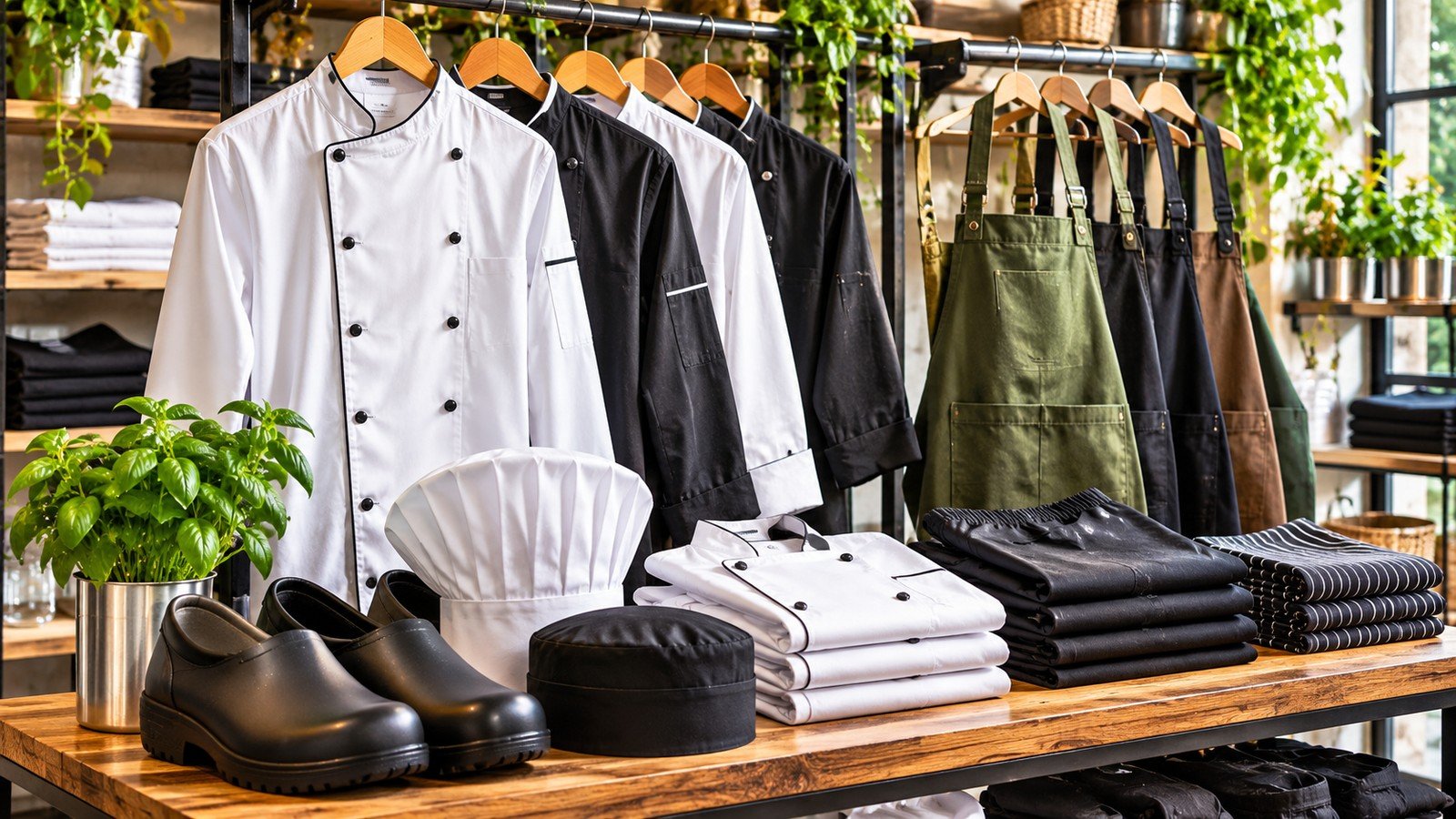
Uniforms & Workwear is more than a dress code: the right clothing makes daily movement easier, supports consistent presentation, and helps staff dress appropriately for kitchen, service, and cleaning duties. This practical buyer’s guide explains what to prioritize before ordering chef jackets, aprons, non-slip work shoes, and workwear accessories for restaurants, cafés, catering teams, and home cooking.
Start with the job, not the uniform catalogue
Before choosing a jacket or apron, map the work your team actually performs. A hot-line cook, a pastry chef, a waiter carrying trays and a dishwasher may all need different fits, fabric properties and pockets. Buying one garment for every job can produce avoidable discomfort and replacements.
For each role, note the normal working temperature, exposure to splashes, frequency of laundering, how much bending or reaching is involved, and whether the person works in front of guests. A practical workwear decision matches these conditions rather than simply matching photographs on a product page.
Compare rental car deals
Compare vehicle categories and rental offers before choosing the option that fits your trip.
1. Chef Jackets & Kitchen Uniforms
Chef jackets should allow free shoulder movement, be comfortable during long shifts and fit without loose fabric hanging near equipment. Pay attention to material composition, washing instructions, seam construction and whether the jacket closes securely. Some teams prefer lightweight garments for warm kitchens; others value tougher fabrics for repeated laundering.
Double-breasted jackets can provide more fabric coverage at the front, while simpler styles may be easier to put on and take off. A breathable design is useful, but labels like “cooling” or “professional grade” should not replace checking the actual specification. Ask whether the size chart gives body measurements, finished garment dimensions or both.
If staff will work near heat or flames, check the manufacturer’s stated limitations and your workplace requirements. Ordinary chef clothing is not automatically flame-resistant protective clothing.
- Fit: enough ease at shoulders and elbows to reach shelves and workstations.
- Material: appropriate weight and care requirements for daily use.
- Fastening: closures that stay secure through movement and laundering.
- Care: washing and drying instructions suitable for your operations.
- Consistency: a repeatable color and style when replacing staff uniforms.
Browse Uniforms & Workwear shopping collections for chef jackets and kitchen clothing, then compare each retailer’s specifications before buying.
2. Aprons & Service Clothing
Aprons protect underlying clothing from routine spills and make a useful part of a coordinated hospitality look. Bib aprons provide more front coverage; waist aprons may suit lighter front-of-house duties. Long ties and heavy neck straps can become uncomfortable over time, so consider adjustable cross-back designs for staff who wear an apron for an entire shift.
Pocket placement matters: servers may need access to an order pad, pen and handheld device, while cooks might prefer fewer external pockets and a straightforward washable fabric. Decorative details that look attractive in marketing images can complicate laundering or snag in a busy workplace.
For home hosts, a sturdy, easy-care apron is usually more useful than a highly specialized restaurant garment. For a catering team, ordering a trial set in a few sizes before placing a large quantity can reveal fit and color differences.
3. Work Shoes & Slip-Resistant Footwear
Footwear deserves special attention because hospitality workplaces may have wet, greasy or hard floors. Look for footwear designed for the intended work setting, with information about outsole grip, fit, cleanability and any claimed test standards. No shoe can guarantee that someone will never slip; keeping floors clean and promptly addressing spills are also essential.
Choose a secure fit with suitable toe room and cushioning for standing and walking. Closed designs may be preferable where food, cleaning liquids and dropped objects are possible, but the required protection depends on the work and local safety policy. Do not assume that a shoe is protective footwear just because it is sold as a “chef shoe”.
Before purchasing for a team, confirm the available size range, width options, return conditions and whether the style is appropriate for employees who must wear it throughout a shift.
4. Chef Hats & Workwear Accessories
Head coverings, hair restraints, neckwear, work trousers and other accessories should match the tasks and the business’s hygiene practices. Hair-control requirements vary by role and local guidance; check the policies that apply to your establishment.
For trousers, prioritize practical movement and care. For protective gloves or equipment, match the product to the specific hazard and task rather than assuming that any product labeled “safety” is suitable. Accessories should complement a uniform system, not create clutter or new snags during work.
How to plan uniform quantities and replacement
Calculate more than one garment per worker if daily laundering or spills are expected. A simple starting model is the number of active uniforms needed between wash cycles plus a small replacement reserve; the right number varies with shift patterns, laundry turnaround and seasonal demand.
Create a specification sheet with supplier, color, fabric, size code, care label, order date and replacement trigger. This reduces the frustration of discovering that a new batch differs from the original. Include an allowance for changes in staff size, role and headcount.
A practical comparison before checkout
Compare the total cost of ownership, not only the advertised price. A cheaper garment that loses shape quickly, requires special care or cannot be reordered may cost more over a season than a durable, repeatable option. Shipping charges and return policies are especially important for bulk orders.
Also separate personal style from workplace suitability. A fashionable apron can be excellent for a coffee shop, but a busy commercial kitchen may favor simpler, easy-clean surfaces and fewer protruding straps.
- Check the complete size chart and material composition.
- Read washing, drying and care instructions.
- Confirm role-specific workplace safety and hygiene requirements.
- Review return terms before ordering several sizes.
- Compare replacement availability for uniform consistency.
- For larger teams, test a small order first.
Common mistakes to avoid
Buying by appearance alone: Photographs do not establish breathability, durability or protection. Review actual product details.
Assuming “non-slip” means slip-proof: Footwear performance depends on the floor, contaminants, wear and maintenance.
Ignoring laundering: A uniform is only useful when it can be cleaned as often as the role requires.
Overlooking fit: Incorrect sizing affects comfort and can disrupt workflow. Budget for exchanges or a trial order.
Frequently Asked Questions
What is the most useful uniform purchase for a new restaurant?
Start with role-appropriate footwear and washable working garments. Then add matching aprons and front-of-house pieces based on the actual staff duties and customer-facing style.
Are chef jackets suitable for home cooking?
Yes. Home cooks may appreciate the coverage and practical design, although a simpler washable apron is enough for many household kitchens.
Do all kitchen staff need the same shoes?
Not necessarily. Footwear requirements depend on the job, the floor and local workplace policy. Look for job-appropriate grip, fit and any required protective features.
How many uniforms should each employee have?
There is no universal number. Base it on the number of shifts between laundry cycles, expected spills and how quickly replacements can be provided.
How do I choose apron material?
Compare durability, comfort, laundering instructions and the type of splashes likely during work. Check that any specialty material is suitable for the intended setting.
Can I buy restaurant uniforms online without trying them on?
You can, but review measurements carefully and consider a small test order where sizing consistency and bulk purchasing matter.
Shop Uniforms & Workwear
Explore the four product collections on Habesha Studio’s Uniforms & Workwear page, or browse related equipment and supplies in the Habesha Shopping Center. Always verify size, specifications and current availability with the retailer.
Affiliate disclosure: Habesha Studio may earn a commission from qualifying purchases through participating retailer links, at no additional cost to you. Product availability, prices and claims are determined by the retailer.