
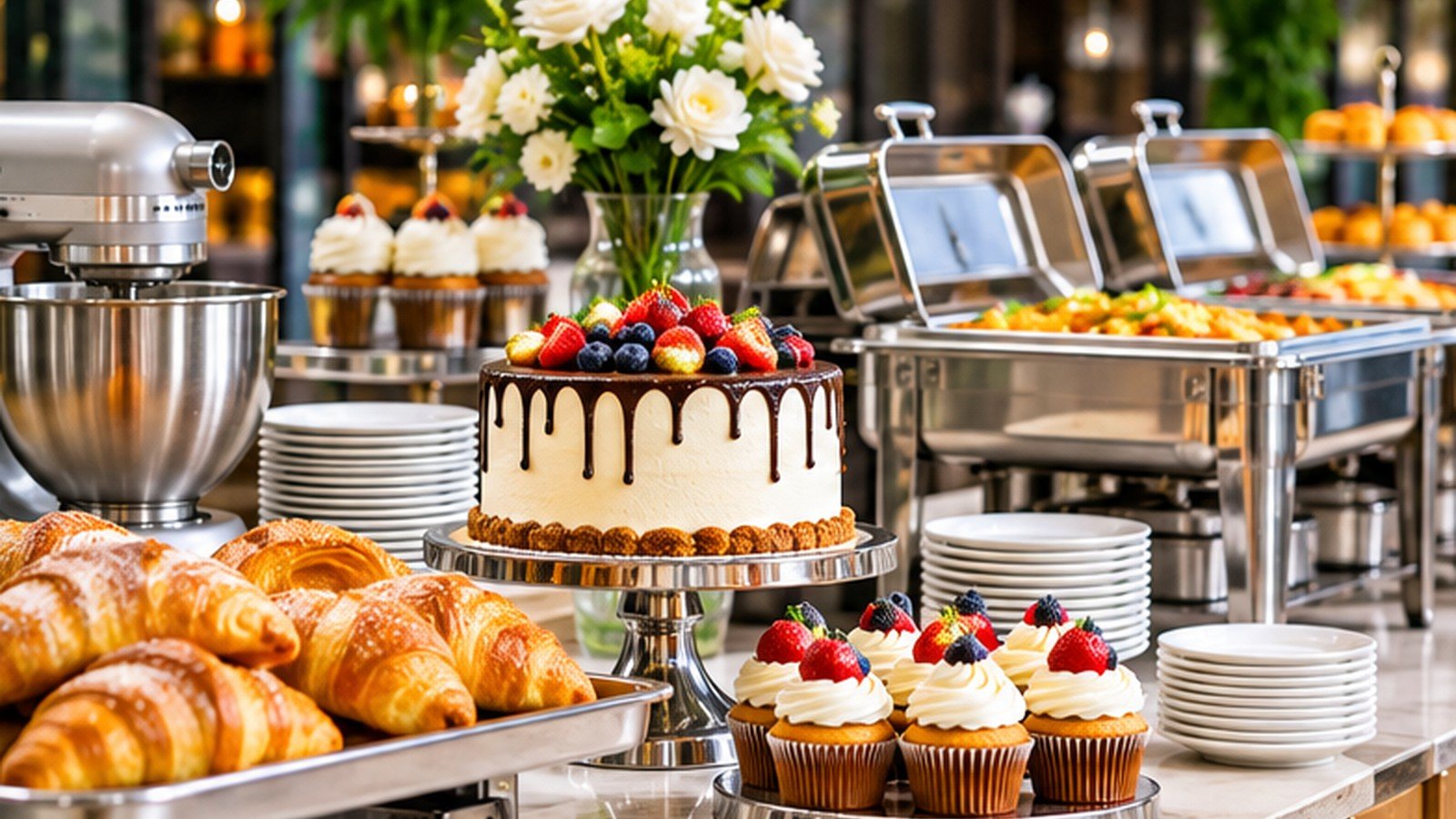
Bakery, Catering & Events brings several purchasing decisions together: the tools used to prepare food, the equipment used to hold and serve it, and the finishing details that make a buffet or celebration run smoothly. This guide helps small bakeries, caterers, cafés, restaurants and home hosts buy what they actually need, without confusing baking appliances with event-service supplies.
Start with your menu, volume and service plan
Write down your most frequently prepared items, expected batch size, available counter space and how guests will receive their food. A business baking dozens of loaves daily has different requirements from a home baker preparing an occasional birthday cake. Likewise, a buffet with multiple hot dishes needs a different setup from a coffee-and-pastry reception.
A shopping list based on the menu is more useful than buying an impressive-looking machine first. The goal is a reliable workflow—from ingredient preparation through service and cleanup—with enough capacity for busy periods and no costly gaps.
Aviasales
Explore a useful travel service from one of our selected partners.
1. Baking Equipment & Tools
Begin with the equipment that matches your actual recipes: mixers, pans, baking sheets, racks, measuring equipment, thermometers and basic hand tools. A stand mixer can make repeated mixing easier, but capacity, bowl design, attachment compatibility and cleaning requirements matter more than appearance.
Check whether a mixer or other appliance is rated for the intensity and duration of use you expect. Some countertop machines are intended for domestic tasks; commercial production may require different equipment, service support and electrical arrangements. Always follow the manufacturer’s specifications.
For baking pans and sheets, measure the oven cavity, shelf clearance and available storage. A pan that fits one oven may obstruct airflow or fail to fit a smaller unit. Material, coating and cleaning restrictions should be checked, especially when a bakery will use the same tools repeatedly each day.
- Capacity: appropriate for recipe batch size and peak production.
- Fit: compatible with the existing oven and storage rack.
- Cleaning: surfaces and parts that can be maintained efficiently.
- Power: suitable electrical supply and manufacturer-rated operating conditions.
- Replacement parts: access to attachments, bowls or seals if needed.
2. Catering & Buffet Supplies
Chafing dishes, serving trays, tongs, buffet stands and suitable food transport containers help organize events. Choose serving equipment based on the number of guests, menu style, replenishment plan and available space. A compact breakfast buffet may need only a few well-placed vessels, while a larger reception benefits from duplicate service points to reduce queues.
If you need to keep food hot or cold, select equipment designed for the required holding purpose and follow applicable food-safety procedures. A decorative chafing dish is not a substitute for checking temperatures, preparation time and safe service limits. Different heating systems also have different power, fuel and ventilation requirements.
For off-site catering, include the practical realities of transport: secure lids, stable stacking, handles, setup time and who is responsible for cleaning after the event.
3. Cake Decorating & Dessert Supplies
Cake boards, turntables, piping bags, tips, spatulas, scrapers and display stands can be useful for a decorating station. Prioritize tools that suit your desserts. A rotating stand is helpful for coating and finishing layered cakes; a simple offset spatula and a few piping tips may be enough for cookies and cupcakes.
Check food-contact suitability, cleaning requirements, dimensions and the weight a display stand can support. A tiered stand should be selected for the actual cake size and venue conditions, not only for photography. Store delicate display items so edges and finishes do not become damaged between events.
4. Event Serving & Table Accessories
The guest-facing area should feel intentional without overwhelming the budget. Trays, drink dispensers, cake servers, labels, table linens, serving utensils and simple display risers can improve visibility and flow. Place the frequently used items within easy reach, and make it obvious which utensils belong to each dish.
For a Habesha-inspired gathering, serving style can include traditional presentation details alongside practical buffet equipment. Keep decorative pieces distinct from equipment intended for direct food contact unless the manufacturer confirms they are suitable for that use.
A good visual theme can be built from a few consistent materials and colors. Consistency usually matters more than the total number of accessories.
Plan the guest journey from arrival to cleanup
Place entry points, plates, main dishes, condiments, drinks and waste collection in a sensible sequence. Leave access for replenishment and staff movement. When planning buffet tables, consider accessibility, guest traffic and safe separation of equipment cords and hot surfaces.
Make a timed checklist for transporting equipment, setting up, checking food-holding conditions, refilling trays and clearing the venue. The checklist should identify what is owned, rented or supplied by the customer so nothing is assumed at the last minute.
Buy, rent or upgrade?
A single event does not always justify buying expensive equipment. Estimate how frequently the product will be used, how much storage it needs and whether the purchase reduces paid labor or prevents repeated rental costs. Add cleaning, repair, electricity, transportation and replacement to the calculation.
Some businesses benefit from owning everyday tools while renting specialist buffet stations for large events. Start with versatile basics, learn where bottlenecks appear, then buy equipment to solve those specific problems.
Choosing products without relying on invented prices
Online listings change and some commercial items do not show a straightforward fixed price. Rather than copying an old price into a blog article, compare the actual specification, seller, warranty, delivery options and availability on the retailer’s current product page.
For products connected to power, heat or food contact, pay particular attention to operating limits, material declarations and the suitability of the item for its intended use. A listing that looks professional is not proof that it meets your workplace requirements.
Shopping checklist for your first event or bakery station
- List the actual menu, number of guests or expected daily batch size.
- Inventory the equipment you already own and measure the work area.
- Choose baking and preparation tools matched to recipe requirements.
- Plan serving, food holding and replenishment separately from cooking.
- Add transport, storage, cleaning and replacement costs.
- Review compatibility, manufacturer instructions and supplier return policies.
- Place a smaller trial order for consumables and unfamiliar accessories where practical.
Mistakes that make events harder
Buying oversized equipment: More capacity is not automatically more efficient if the equipment is rarely used or cannot be stored.
Overlooking service logistics: A beautiful buffet still needs safe food handling, accessible utensils and a practical refill plan.
Mixing decoration with food-contact products: Use only appropriate materials for direct food use.
Ignoring cleanup: Equipment that is awkward to disassemble or transport may create more work than it saves.
Frequently Asked Questions
What equipment should a small catering business buy first?
Start with versatile preparation tools, dependable serving utensils, suitable transport containers and the food-holding equipment actually required by your menu.
Is a home stand mixer suitable for commercial baking?
Possibly for limited use, but verify the machine’s rated workload, warranty terms and suitability for the volume and operating conditions you require.
Do chafing dishes cook food?
They are generally intended for holding or presenting prepared food, not for cooking raw ingredients. Follow the product instructions and applicable food-safety guidance.
What matters most for cake-display stands?
Check the product’s stable load capacity, dimensions, material suitability and the location where guests will access the dessert.
Should I buy or rent buffet equipment?
Compare frequency of use, storage, cleaning and transport costs with rental fees. Renting occasional specialty equipment can be more sensible.
Can these supplies be used at home?
Yes. Many basic baking and serving tools suit family gatherings and home kitchens; check the size and care requirements before buying.
Explore Bakery, Catering & Events Products
Shop the four focused departments on Habesha Studio’s Bakery, Catering & Events page, or see the broader Habesha Shopping Center for related serving, packaging and kitchen needs. Confirm product information on the retailer’s current listing before ordering.
Affiliate disclosure: Habesha Studio may earn a commission from qualifying purchases through retailer links at no extra cost to you. Prices, stock and product descriptions can change.