
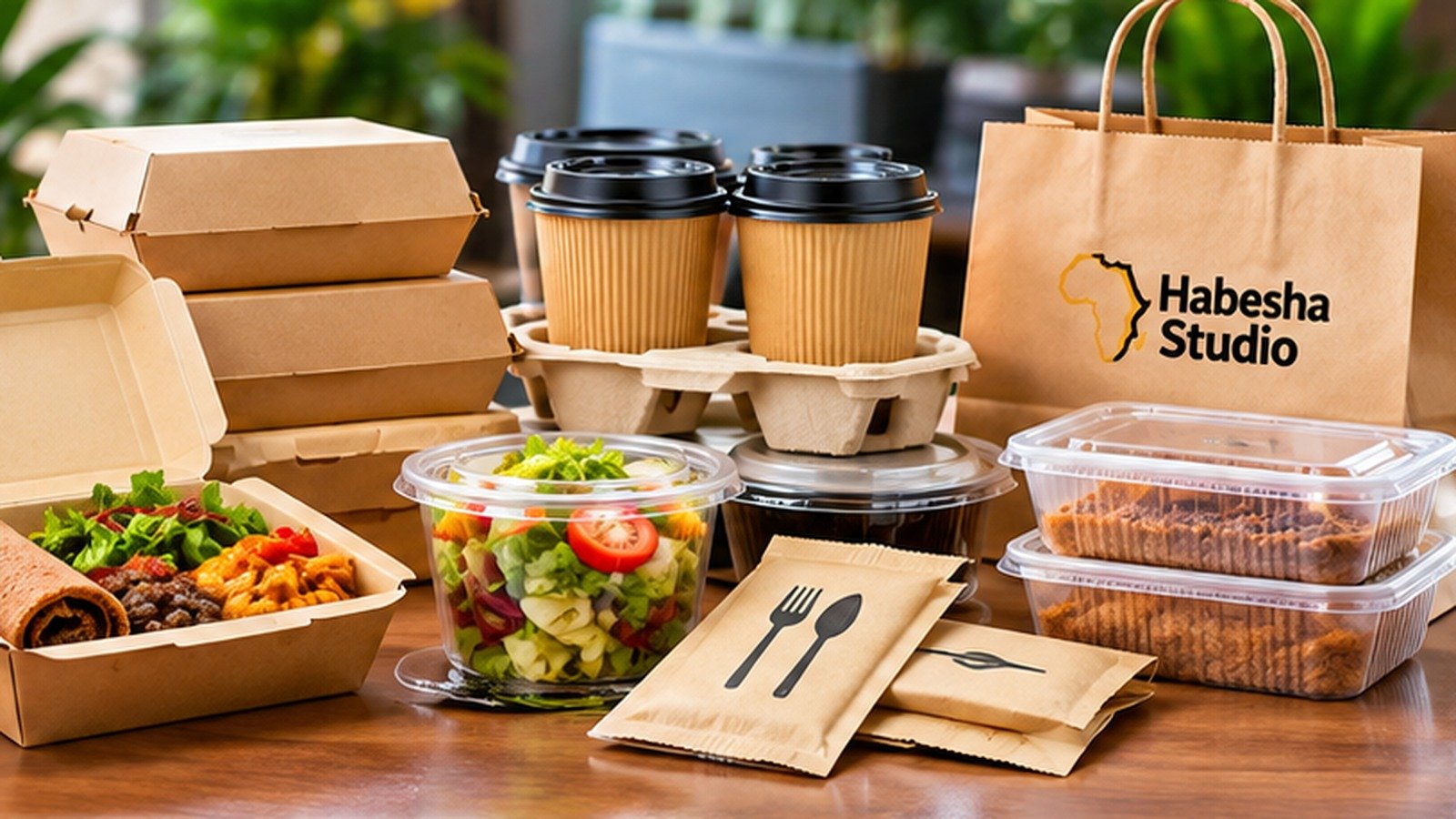
Choosing takeaway, delivery and packaging supplies is about more than finding a container that looks good. Your packaging needs to protect food, suit the journey, feel convenient to customers and make sense for your actual budget. Whether you serve Ethiopian and Eritrean dishes, run a café, organize a catering event or pack lunches at home, a practical packaging system can reduce leaks, wasted materials and last-minute packing problems.
This guide compares four manageable groups of essentials: food containers and meal boxes, cups and lids, takeaway bags and delivery supplies, and disposable cutlery and wrapping. The aim is to help you select products for your food and service model, without assuming that expensive packaging is always better.
Browse the Takeaway, Delivery & Packaging shopping page or explore the Habesha Shopping Center for related kitchen and restaurant categories.
Book museums & attraction tickets
Find museum entry, landmarks and bookable attraction tickets for your trip.
Start with your menu, not a packaging catalog
Before buying boxes by the case, write down the foods and beverages you package most often. Hot stews have different needs from crisp pastries, chilled salads or bottled drinks. Also consider how each order reaches the customer: carried by hand, collected at the counter, transported by bicycle or car, or stored before a larger event.
Ask four questions: Does the meal contain liquid or oil? How long will it be inside the package? Will the customer need to reheat it? Is the packaging intended for direct food contact? These answers narrow your choices much faster than choosing by appearance alone.
1. Food Containers & Meal Boxes
Containers are the foundation of a reliable takeaway setup. Common formats include compartment trays, hinged clamshells, lidded bowls, paperboard boxes and reusable food-storage containers. There is no universal “best” material: the right option depends on temperature, moisture, portion size and the manufacturer’s intended use.
Choose the shape around the food
Curries, sauces and stews: prioritize secure lids, suitable liquid containment and a stable base. For an Ethiopian or Eritrean takeaway order with wot, consider packing sauces separately from injera where practical, to help preserve texture during transport.
Rice plates and mixed meals: look for compartments or adequate internal space so different components do not move or spill. Fried or crisp food: consider packaging with appropriate ventilation when suitable, because trapped steam can soften food during a journey. Salads and cold desserts: choose containers intended for chilled foods and check whether condensation could affect presentation.
Check product claims carefully
“Microwave-safe,” “freezer-safe,” “compostable” and “leak-resistant” describe different properties. A container may be suitable for one use but not another. Check the seller’s actual specifications, temperature limits and any stated food-contact information. Do not assume that a kraft-paper look means the inner coating is plastic-free, or that a compostable label guarantees local collection facilities will accept it.
Practical ordering tip
Test the smallest available pack before buying in bulk. Fill one sample with your typical meal, close it, carry it in a bag and inspect it after the normal trip time. Evaluate leakage, stackability, how easy it is to open, and whether the serving size looks right.
2. Cups, Lids & Drink Packaging
For coffee shops, cafés and pop-up events, drink packaging should match the temperature and style of the beverage. Hot coffee, tea, iced drinks and thick smoothies may each require a different cup and lid combination. A lid that fits one brand or cup size may not fit another, even if both products show similar capacity.
Hot drinks versus cold drinks
For hot beverages, check whether the cup and lid are rated for the intended temperature, whether a sleeve is necessary, and whether the drinking opening is comfortable. For cold drinks, compare cup rigidity, lid attachment and the suitability of straw openings if applicable. Double-check capacities using the seller’s stated units rather than relying on photos.
If your menu includes traditional Ethiopian coffee service, packaging is only for the portion intended to travel; a complete jebena ceremony is a separate hospitality experience. Use a stable takeaway cup for the coffee itself, and keep ceremony equipment within the appropriate coffee and traditions categories rather than treating it as packaging.
Reduce mismatched inventory
For a small café, standardizing around one or two cup sizes can simplify ordering and staff training. Record the exact compatible lid product, reorder code and supplier for each cup. Include carriers when customers frequently buy several drinks at once.
3. Takeaway Bags & Delivery Supplies
A food bag is not simply an outer wrapper. It is part of the carrying system. Paper bags, handled kraft bags, reusable delivery totes, insulated carriers and order labels each solve different problems. Select bag dimensions according to the actual filled containers, not an empty package photographed in an online listing.
Strength, closure and organization
Heavier meals need a suitable bag with enough load capacity and a stable base. A flat-bottomed bag can help prevent containers tipping. For multi-item orders, simple labels—such as customer name, order number and dietary notes from your own verified kitchen process—can reduce confusion at pickup. Tamper-evident closures may be worth considering for some delivery workflows, but they do not replace safe preparation and handling.
Insulated delivery bags help manage temperature during transport when used correctly, but they are not a substitute for validated food-temperature procedures. Choose size, insulation design, cleaning instructions and bag access according to your service model. Restaurants should follow their applicable local food-safety requirements rather than assuming a particular product provides compliance on its own.
Example: a small takeaway counter
Imagine a café selling coffee, one warm meal and a cold salad. Instead of stocking ten kinds of bags, it may be practical to keep one compact drink carrier, one medium flat-bottom paper bag and one larger insulated bag for deliveries. A smaller set of well-chosen supplies is often easier to store, replenish and use consistently.
4. Disposable Cutlery & Wrapping
Cutlery, napkins, foil, food wrap and labels are easy to overlook, yet they affect the customer’s experience. Offer only the accessories needed for the order. A meal eaten with utensils may need a fork or spoon, while another meal can be served traditionally without disposable cutlery when appropriate for the dish and customer preference.
Compare material strength, packaging size, surface finish and whether an item is intended for food contact. For foil and wrapping products, check suitability for the food type and intended use. Paper napkins, portion-control condiments and simple labels can also be stocked as a small, separate accessories collection without creating unnecessary subcategories.
How to compare packaging costs without guessing
Looking only at the price of one box can mislead. For a useful comparison, estimate the cost per completed order rather than the price per pack. Include the main container, lid, bag, napkin, optional cutlery, labels and expected wastage. Add shipping and storage considerations when comparing bulk cases.
| Cost item | What to verify | Common oversight |
|---|---|---|
| Food container | Units per pack and lid inclusion | Lids sold separately |
| Beverage cup | Capacity and lid compatibility | Wrong lid diameter |
| Carry bag | Width, gusset and suitable load | Meal box does not fit flat |
| Accessories | What each customer actually needs | Adding items to every order automatically |
| Bulk purchase | Delivery, storage and usable quantity | Large case that takes too long to consume |
Simple working formula: per-order packaging cost = total cost of the packaging used for one order + a realistic allowance for damaged or unused units. This lets you compare two packaging setups without inventing product prices or claiming savings that have not been measured.
Food safety, materials and sustainability: what to check
Packaging must be suitable for its intended food-contact use and the temperatures involved. Requirements vary by country, product and business type. Review the supplier’s specifications and any applicable local rules, especially for food sold commercially. Do not treat general marketing badges as proof of suitability.
Sustainability choices also need context. Recyclability depends on local programs, food contamination and the materials used; “biodegradable” and “compostable” are not interchangeable. Ask whether your customers have access to an appropriate disposal route. Avoid absolute environmental claims unless the product details and collection conditions support them.
For a home gathering, a washable reusable container may be convenient if it can be safely returned and cleaned. For a delivery business, consider whether a reusable system is operationally realistic before changing your workflow.
Buying checklist for a restaurant, café or home event
- Identify the menu: hot, cold, saucy, crisp and drink items.
- Choose sample sizes: measure portions and container dimensions.
- Verify intended use: food-contact suitability, temperature and reheating claims.
- Test closures: check sealing, stacking, carrying and customer opening.
- Match cups to lids: verify specifications rather than guessing.
- Check bag fit: confirm the filled order sits securely.
- Calculate actual costs: compare a complete packed order, not just one container.
- Plan storage: keep cases dry, organized and easy for staff to replenish.
- Review disposal claims: distinguish local recyclability from marketing language.
- Start small: test a batch before committing to bulk quantities.
Common packaging mistakes to avoid
Buying by looks alone: an attractive box may not match your menu or journey. Using one container for everything: liquids, crisp food and chilled items can have conflicting requirements. Ignoring lids: compatibility and sealing are essential. Overstocking: too many variations increase storage and staff confusion. Copying retailer prices into a blog: displayed Amazon prices and availability can change; let customers verify current details with the seller.
Frequently asked questions
What takeaway packaging should a new restaurant buy first?
Start with one or two tested meal-container formats, a suitable carry bag and only the drink and accessory sizes your menu actually needs. Expand after you see which products customers order most.
What container works for Ethiopian or Eritrean takeaway food?
Choose according to the dish. Saucy wot needs appropriate leak resistance; injera may benefit from separate packing for certain journeys. Test with your own portions and transport conditions rather than relying on a generic “Ethiopian food box” description.
Is paper packaging always eco-friendly?
No. Coatings, food residue, local disposal options, production and transport all matter. Verify the specific product’s claims and local collection system.
Can I put hot food into any plastic container?
No. Only use packaging intended for the food and temperature specified by the manufacturer, and check applicable food-contact requirements.
Is it cheaper to buy packaging in bulk?
Sometimes the unit cost is lower, but bulk buying can increase freight, storage needs and unused stock. Compare the total practical cost per order before committing.
Does Habesha Studio sell or ship these products directly?
Habesha Studio provides shopping guidance and retailer links. Product purchases, price, delivery and returns are handled by the relevant seller; check their terms before ordering.
Find packaging that fits your workflow
A well-chosen takeaway setup makes service easier for staff and carrying simpler for customers. Begin with a few practical containers, matched lids and bags, and an honest test of your menu. Then use your actual customer orders to refine what you stock.
Explore Takeaway, Delivery & Packaging collections or browse packaging options on Amazon. For cookware, appliances, dining supplies and other departments, visit the Habesha Shopping Center.
Affiliate disclosure: As an Amazon Associate, Habesha Studio earns from qualifying purchases. Some shopping links may be affiliate links. Product prices and availability are determined by retailers. This guide is general buying information, not a certification of any product or food-safety procedure.