
In This Guide
- Understanding the Ethiopian Coffee Ceremony
- The Ritual Process
- Cultural Significance
- Elements of the Ceremony
- Variations Across Regions
- Inviting Guests
- Participating in the Ceremony
Understanding the Ethiopian Coffee Ceremony
The ethiopian coffee ceremony is a centuries-old tradition that highlights the importance of coffee in Ethiopian culture. Coffee, known as “bunna” in Amharic, is believed to have originated in Ethiopia, making the ceremony a vital part of the nation’s heritage. The ceremony typically involves a detailed process of roasting, grinding, and brewing coffee, often performed in the presence of guests, which emphasizes the importance of social interaction.
At its core, the ceremony revolves around the preparation of coffee in a manner that respects the ingredient and the people involved. It is common for families to host these ceremonies for guests, showcasing their hospitality and creating a communal atmosphere that fosters conversation and connection.
The Ritual Process
The preparation of coffee during the ethiopian coffee ceremony is a meticulous and artistic process. It traditionally unfolds in several stages:
- Roasting: Green coffee beans are roasted in a pan over an open flame, leading to a rich aroma that fills the air.
- Grinding: Once roasted, the beans are ground using a mortar and pestle to achieve a fine consistency.
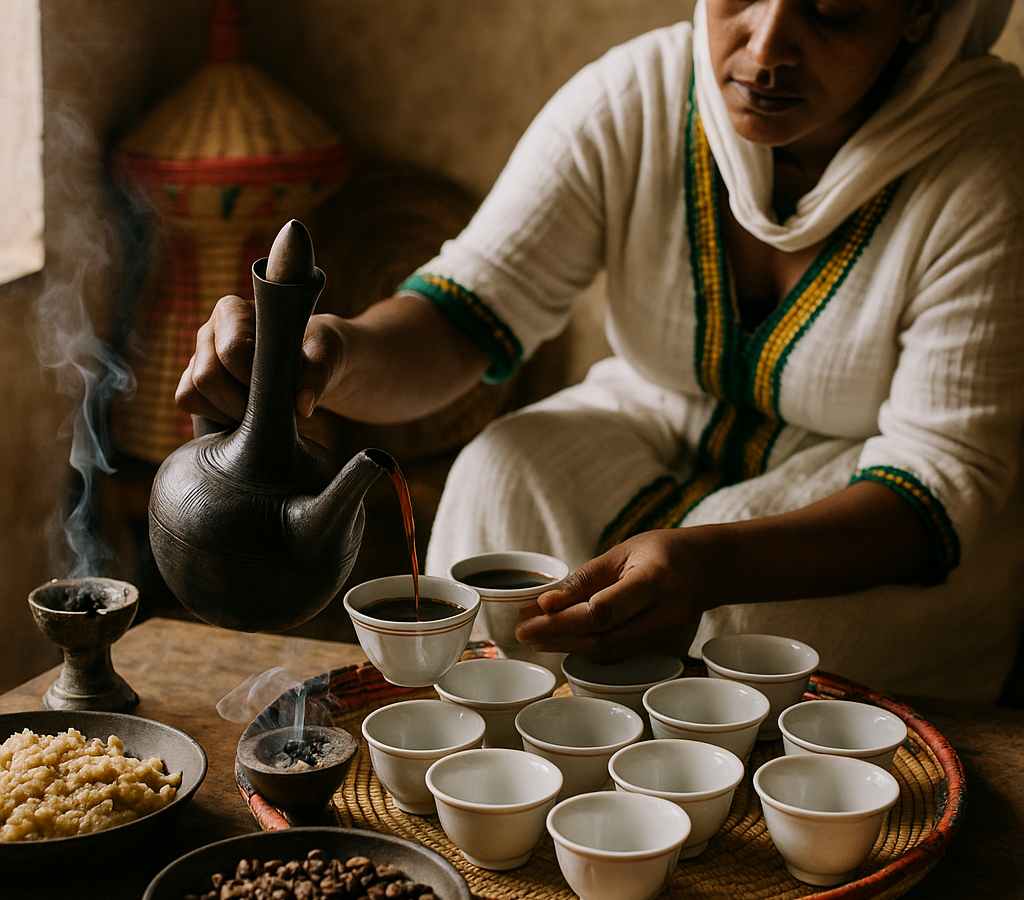
- Brewing: The ground coffee is then brewed in a special pot called a “jebena,” a traditional Ethiopian coffee pot, often made from clay.
- Serving: The brewed coffee is poured into small cups, often accompanied by sugar or salt, and served in a specific order.
Each of these steps is performed with care and attention to detail, reflecting the respect for the coffee and the ceremony itself. The entire process is often accompanied by the sharing of stories, laughter, and conversation among those present.
Cultural Significance
The ethiopian coffee ceremony holds profound cultural significance beyond the act of preparing coffee. It represents a core value of Ethiopian society: hospitality. The ceremony is a way of welcoming guests and establishing a sense of community. It signifies a gesture of respect and friendship, making it a vital aspect of social gatherings.
Moreover, the ceremony acts as a bridge between generations. Families often pass down the rituals and methods of preparation from parents to children, ensuring that the tradition remains alive. The act of sharing coffee also fosters dialogue, allowing people to connect on a personal level, discuss important matters, or simply enjoy each other’s company.
Elements of the Ceremony
<pSeveral key elements define the ethiopian coffee ceremony, each contributing to its rich tapestry of tradition:
- Jebena: The traditional coffee pot used for brewing coffee.
- Meskel flower: Often burned during the ceremony to create a fragrant atmosphere.
- Incense: Used to enhance the sensory experience and signify the importance of the event.
- Small cups: Typically used for serving coffee, allowing for multiple rounds of sharing.
These elements work together to create a unique and immersive experience that engages all the senses, reinforcing the ceremony’s significance in Ethiopian culture.
Variations Across Regions
While the essence of the ethiopian coffee ceremony remains consistent across the country, there are notable regional variations in practices and customs. For instance, in some areas, coffee may be served with popcorn or other snacks, adding a local flavor to the experience. The roasting method may also differ; in some regions, coffee beans are roasted until they are dark and oily, while in others, a lighter roast is preferred.
Furthermore, the social dynamics during the ceremony can vary. In some communities, the ceremony might be a more formal affair, with specific roles assigned to participants, while in others, it may be a casual gathering among friends and family. These variations enrich the tradition, reflecting the diverse cultural landscape of Ethiopia.
Inviting Guests
<pInviting guests to partake in the ethiopian coffee ceremony is a significant gesture. It is customary for the host to prepare the ceremony with great care, often cleaning the area and arranging seating to accommodate visitors. The act of sharing coffee is seen as an invitation to bond and connect, with hosts often expressing their joy in having friends and family around.
During the ceremony, it is polite for guests to appreciate the coffee and the effort put into its preparation. This might involve complimenting the taste or engaging in conversations about the coffee’s origins or the ceremony itself. Such interactions enhance the communal experience, making the ceremony a delightful occasion for all involved.
Participating in the Ceremony
For those unfamiliar with the ethiopian coffee ceremony, participating can be a rewarding experience. Here are some tips for making the most of the occasion:
- Be Respectful: Acknowledge the significance of the ceremony and approach it with an open mind.
- Engage: Participate in conversations and express your appreciation for the coffee.
- Enjoy Multiple Rounds: It is customary to have at least three servings of coffee, each with a different level of sweetness.
- Observe: Take note of the rituals and customs, as they may differ from what you are used to.
Participating in the ceremony not only allows you to enjoy delicious coffee but also offers a glimpse into the rich cultural heritage of Ethiopia.
Conclusion
The ethiopian coffee ceremony is a remarkable tradition that encapsulates the essence of Ethiopian hospitality and community. Through its intricate process and rich cultural significance, the ceremony fosters connections and creates lasting memories among participants. Whether you are a guest or a host, engaging in this ritual provides an opportunity to celebrate the warmth of Ethiopian culture and the deep bonds it nurtures.
For those interested in exploring Ethiopian dining experiences, consider visiting the Habesha restaurant directory for a selection of establishments that may offer this unique ceremony.
To learn more about Ethiopian food and culture, check out our Habesha food and culture guides.